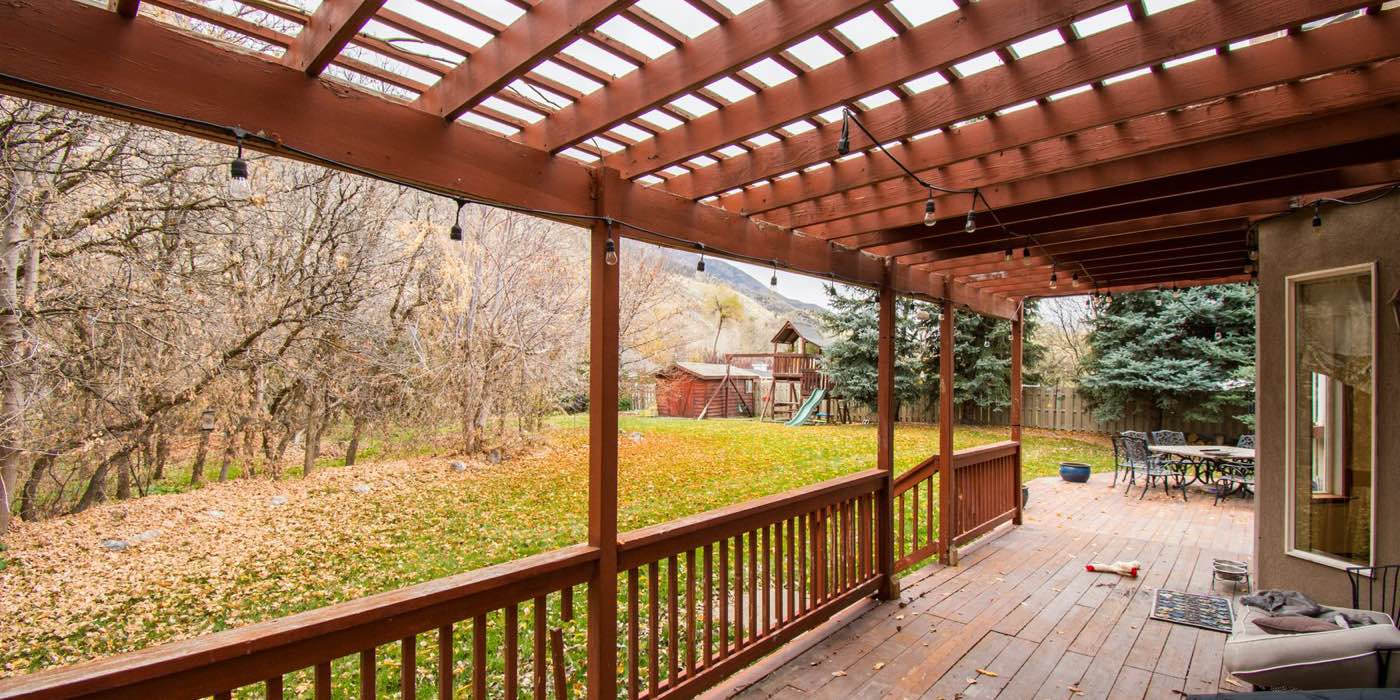
Plenty of deck companies have quietly stopped building wood decks because composite pays better. We haven't. A well-built, well-sealed wood deck is still the best value in a Saginaw backyard, as long as you know what you're signing up for.
Wood decks make sense for a lot of reasons around here. The budget stretches further, which often means a bigger deck or a set of stairs to the yard. Cedar stays cooler underfoot on the west-facing decks in Saginaw Township that catch the afternoon sun. And there's a look, on the older homes in Old Town and the farmhouses out toward Chesaning and St. Charles, that composite just doesn't pull off.
The catch is maintenance, and we'd rather you hear it from us than find out in year three. A wood deck in this climate needs a wash and a fresh coat of sealer or stain on a schedule, or it goes gray and starts to check. Build it right, keep it sealed, and it's a deck you'll be proud of for a long time. Skip the sealing and you'll be calling about repairs.
Wood decks we build
- Pressure-treated pine — the workhorse. Treated to resist rot and insects, the lowest cost per board, and the standard for every frame we build regardless of surface.
- Cedar decking — naturally rot-resistant, lighter, cooler, and better looking. Costs more than pressure-treated, less than composite, and takes stain beautifully.
- Ground-level, elevated, and multi-level — the same range of designs as any other deck, framed for Saginaw snow loads.
- Wood railing, or mixed — a cedar deck with black aluminum balusters is a favorite: the look of wood with fewer parts to stain.
- Built-in benches and planters — the details wood does best, cut and fitted on site.
- Staining and sealing included — every wood deck we build leaves with its first coat on, so the clock on maintenance starts from a protected surface.
What a Saginaw winter does to bare wood
Water gets into the end grain in November, freezes, expands, and opens the board a little. Then it thaws and does it again, dozens of times before April. Snow sits on the surface and keeps it wet for weeks. By spring an unsealed board is gray, checked, and rough. Sealer is what stops that cycle, and the boards are gapped and the deck ventilated so it can dry out between rounds.
Pressure-treated or cedar?
Both are real wood, both need sealing, and the difference is mostly cost against looks and comfort.
Pressure-treated
Lowest upfront cost of any decking. Green-tinged when new, weathers to gray if left bare, takes stain well once it dries out. Heavier and a bit more prone to twisting than cedar, which is why board selection and fastening matter. The right pick when the budget is going into size.
Cedar
Naturally resists rot and insects, stays cooler in the sun, and has a grain and color that pressure-treated can't match. Softer, so it dents easier under furniture. Costs more per board. The right pick when the deck is the centerpiece of the yard.
If you're weighing wood against composite, we'll put both on the estimate. We build either; we're not a wood-only shop any more than a composite-only one.
How a wood deck build goes
- Site visit and estimateWe look at the yard, the sun, and the drainage, and leave a written price with pressure-treated and cedar itemized, plus composite if you want the comparison.
- Design and board selectionLayout, stairs, railing style, and a stain color chosen against the house, not a catalog page.
- Permits and prepMost decks that attach to the house or stand 30 inches or more above grade need a permit under the Michigan Residential Code. The City of Saginaw Inspections Division and the Saginaw Township Building Department each handle their own, and every other town runs its own building department. We handle the application and the inspections.
- BuildFootings below the frost line, pressure-treated frame, the surface boards fastened and gapped for drainage, then railing and stairs.
- Seal and walk throughOnce the wood is ready for it, the first coat goes on. We walk the deck with you and hand over a one-page care schedule.
Questions about wood decks in Saginaw
How often does a wood deck need to be sealed in Michigan?
It depends on the product, the sun the deck gets, and the tree cover. Rather than quote a number that's wrong for your yard, we put the schedule for your specific stain or sealer on the care sheet at the walkthrough. The simple test: if water stops beading on the surface, it's time.
Is cedar worth the extra cost over pressure-treated?
If the deck is where you'll spend summer evenings and you care about how it looks and feels, usually yes. If the deck is a landing and stairs off the back door, pressure-treated is the smarter spend. We're happy to price both.
Will a wood deck last as long as composite?
A wood deck that's built on proper footings and kept sealed lasts a long time here. The frame is pressure-treated either way. The difference is that composite boards forgive neglect and wood boards don't. Be honest with yourself about the maintenance, and pick accordingly.
Why does new pressure-treated wood look wet and green?
That's the preservative. The boards arrive with moisture in them and need to dry before stain will take, which is why we sometimes seal a few weeks after the build rather than the same day. It's normal, and it fades.
Want the wood look without the maintenance? Compare on the composite decking page. Already have a wood deck that's gone gray? Staining and sealing brings it back.